

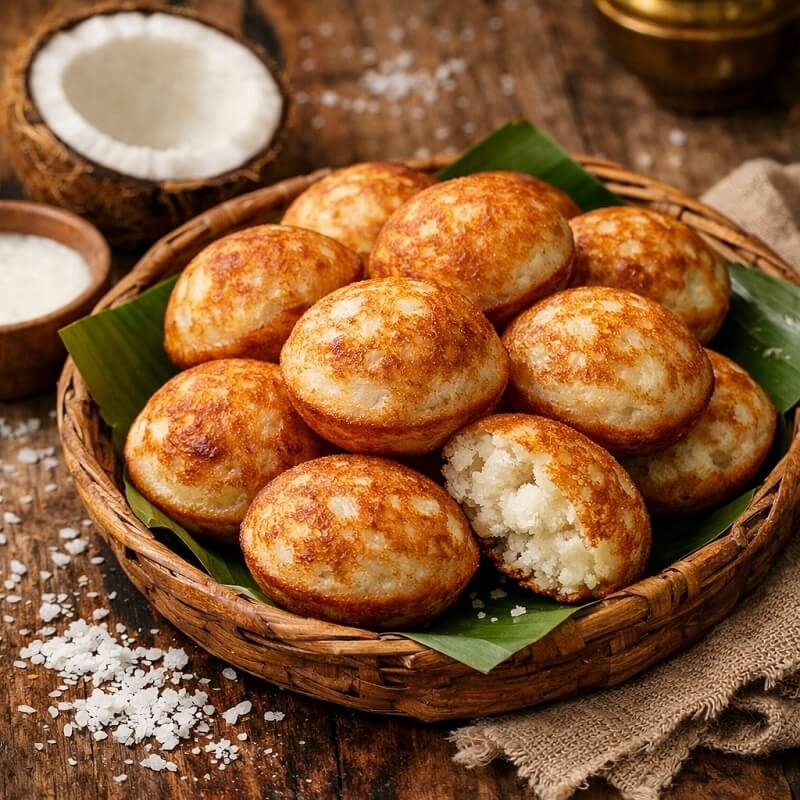
Vitumbua is one of those recipes that looks simple but depends on small details to turn out right. These coconut rice cakes are common along the Swahili coast and are usually eaten with tea, either in the morning or as an evening snack.
If you’re trying Swahili food recipes for the first time, this is a good place to start. The ingredient list is short, and the method is straightforward once you understand how the batter should feel and behave. This guide breaks down a working Vitumbua recipe so you can get the texture right on your first or second attempt.
At its core, this is a fermented rice batter cooked in small molds. That fermentation step is what separates this from a basic pancake or any other sweet rice cake recipe.
Here’s what defines good African rice cakes like vitumbua:
Among East African desserts, vitumbua is not heavy or overly sweet. That’s why people can eat multiple pieces without it feeling too rich.
You don’t need anything fancy for this Vitumbua recipe, but the quality of each ingredient matters.
This combination is what gives coconut rice cakes their balance. Changing ratios too much will affect both taste and texture.
Don’t Miss: How to Make Suya, the West African Grilled Beef, Like a Pro?
Follow these steps in order to get the texture and consistency right.
Rinse and soak the rice for at least 8 hours. If the rice is still firm after soaking, your batter won’t blend properly.
Drain the rice and blend it with coconut milk, sugar, yeast, salt, and cardamom. The batter should be smooth, with no visible graininess.
Leave the batter in a warm place for about an hour. You’re looking for light bubbles across the surface, not foam or a sour smell.
Use an appe pan or a vitumbua pan. Lightly oil each section and heat on medium. If the pan is too hot, the outside will cook too fast.
Pour the batter about three quarters full. Let one side cook until the edges firm up, then flip and cook the other side.
Fresh batches always taste better. The texture changes if they sit too long.
This is where most people go wrong with a sweet rice cake recipe like this. The steps are easy, but the small details matter more.
If your African rice cakes feel heavy, the batter likely did not ferment enough or was too thick.
Even if you follow a proper Vitumbua recipe, small mistakes can affect the result.
Fix one issue at a time instead of changing everything together. That helps you understand what actually works.
Once you get used to the base version, you can adjust it without breaking the recipe.
Cut down on sugar if you prefer a lighter taste. Many Swahili food recipes are not very sweet to begin with.
Add a small amount of grated coconut for extra bite. This works well with soft coconut rice cakes.
Use a regular pan to make a pancake-style version. This is similar to other African rice cakes made without molds.
Add a pinch of cinnamon along with cardamom for a small variation in flavor.
Vitumbua is usually kept simple when served.
Among East African desserts, this one is meant to be easy to eat, not dressed up too much.
This sweet rice cake recipe works because of balance.
If one of these is off, the final result changes. That’s why following a proper Vitumbua recipe matters more than adding extra ingredients.
Vitumbua is one of those East African desserts that depends more on method than ingredients. Once you understand how the batter should look and how the heat should be controlled, the process becomes easy.
This Vitumbua recipe gives you a clear base to work with. From there, you can adjust sweetness, texture, or flavor slightly without losing what makes these coconut rice cakes what they are.
If you’re trying different Swahili food recipes, this one is worth keeping. It’s simple, reliable, and doesn’t require anything complicated.
Yes, but timing matters. You can refrigerate the batter after it has slightly risen, but it will continue fermenting slowly. If left too long, it may turn sour. Before using, let it come to room temperature and stir gently. This helps maintain the consistency needed for good African rice cakes.
An appe pan works well because it creates the same shape and depth. If you don’t have one, you can still use a flat pan, but the result will be thinner. The texture will still be similar, but the shape will change. The cooking time may also be reduced slightly.
This recipe is already dairy-free since it uses coconut milk instead of regular milk. Just make sure the sugar you use suits your preference. Since most East African desserts rely on coconut, many of them are naturally dairy-free without needing substitutions.
This content was created by AI